• Skip to primary navigation
  • Skip to content
  • Skip to footer
HP Sales Northeast

HP Sales Northeast

  • About
    • Blog
    • Careers at
      HP Sales Northeast
  • Products
    • Henny Penny
    • AyrKing
    • PrepRite
    • Fri-Jado
    • Liebherr
    • Frontline
  • Service & Parts
  • Industries
  • Financing
  • Contact
  • Demo Kitchen
  • Get Demo
  • Money Savings Calculators

Corey Meyers

Commercial Fryer Operating Cost: Why Cheap Equipment Gets Expensive Fast

January 30, 2026 By Corey Meyers

Most operators don’t set out to buy cheap equipment. They buy it because opening costs pile up fast, cash flow is tight, and saving a few thousand dollars feels responsible in the moment. But the real commercial fryer operating cost shows up later in labor pressure, recovery speed, oil life, and downtime risk.

We’ve seen this play out hundreds of times. Sometimes cheaper equipment, or even used equipment, works fine for a while. Then real volume hits, staffing gets tight, and small performance differences turn into daily problems. The real test of equipment is not install day. It is Friday at 6 pm.

Here is where cheap equipment usually costs operators the most.

How Recovery Time Impacts Commercial Fryer Operating Cost (And Your Reputation)
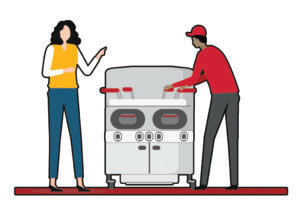
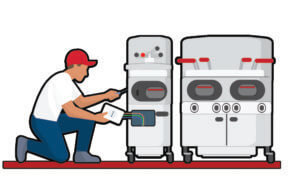
Henny Penny service

Recovery time is its own problem because it hits customer wait times and service flow immediately.

When a fryer cannot recover temperature quickly between drops, the kitchen starts falling behind orders. Ticket times stretch. Drive-thru times increase. Guests start noticing inconsistency or longer waits, especially during peak periods.

At that point, equipment performance stops being a back-of-house problem and becomes a customer satisfaction problem. Sometimes it becomes a reputation problem. Faster recovery helps kitchens stay ahead of orders instead of constantly chasing them. You see it in speed of service, repeat visits, and how stressful peak hours feel for your team.


Oil Life: The Daily Cost Most Kitchens Underestimate

In heavy frying operations, oil life is a HUGE expense.

Oil cost

Non-filtering or poorly designed systems can force operators into changing oil far more often just to hold product quality. In some cases, that can mean daily oil changes, which creates a massive ongoing cost.

Henny Penny fryers protect oil by holding temperature more consistently and making filtration easy enough that staff actually follow the process during a real shift. When filtration is built into the workflow instead of feeling like extra work, oil life improves fast.

Over a year, oil cost differences alone can outweigh the entire savings of buying lower cost equipment upfront. Many operators see Henny Penny fryers pay for themselves in the first couple years once oil savings are factored in.


Downtime And Service Reality: Where Cheap Gets Very Expensive

Downtime is where the difference between equipment providers becomes obvious very quickly.

As a Henny Penny distributor, we’re required to have technicians on the road in fully stocked service vehicles. If something goes wrong, response is fast and most repairs get done right the first visit.

[Henny Penny distributors] boast a first-time fix rate of nearly 90%, far surpassing the industry average of 61%!

Lower tier equipment often does not have that support structure. Parts can be difficult to source, which stretches downtime. Operators often end up calling whoever is available locally instead of trained specialists. That usually means longer diagnosis time, repeat failures, and more disruption inside the kitchen.

When core cooking equipment fails during peak hours, you do not just lose product. You lose momentum, staff confidence, and sometimes customers who do not come back.


The Used Equipment Trap We See Over And Over

There is another version of this that shows up all the time, and it is not just cheap new equipment. It is used equipment.
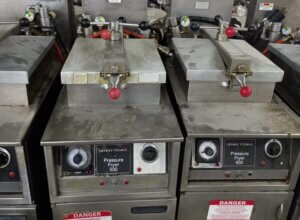
Used Henny Penny pressure fryers

We regularly see operators buy a used fryer thinking they are saving money, only to spend months chasing reliability. By the time they replace worn parts, pay labor to diagnose unknown issues, and deal with repeated downtime, they often spend as much or more than a new unit would have cost.

On top of that, they usually do not get warranty protection, structured startup, or proper staff training. That means the kitchen is learning the equipment the hard way, during live service, instead of starting with a clean baseline and support behind it.

Used equipment can make sense in very specific situations, but most operators underestimate how much risk they are taking on. When core cooking equipment is unreliable, it does not just cost money. It costs stability, and stability is what allows kitchens to grow.


The Operators Who Stop Buying Based Only On Price

The most experienced operators shift their thinking away from purchase price and toward operational stability. They start asking different questions.

  • How fast can this recover during peak volume?
  • How easy is it for staff to filter correctly every time?
  • If this fails, who is fixing it and how fast can they respond?

Those questions usually lead to better long term equipment decisions.


If You’re Tired Of Fighting Your Equipment, There Is A Better Way

If you are serious about long term frying performance, it is worth seeing what operators get from Henny Penny fryers in real kitchen conditions. Recovery speed, oil protection, and consistency are why so many high volume kitchens rely on them every day.

When you look at real commercial fryer operating cost over time, performance and service support matter far more than purchase price.


The HP Sales Northeast Difference

When you work with HP Sales Northeast, you also get startup support, training, and real service backing built in. The easiest next step is to cook your actual product in a live demo and see the difference yourself.

Read More

Filed Under: Blog, Frying, Henny Penny Tagged With: Henny Penny, open fryer, pressure fryer

How Much Does a Commercial Fryer Really Cost to Operate?

July 9, 2025 By Corey Meyers

If you’re running a restaurant with fried food on the menu, your fryer is doing a lot of the heavy lifting. But beyond the price tag, how much is it actually costing you day to day? The answer depends on a few key factors. And if you’re not paying attention to them, you could be pouring money down the drain — or into the oil vat.

Let’s break down the real cost of owning and operating a commercial fryer, and where the biggest savings (or losses) tend to show up.

1. Oil Usage: The Big One

Oil is the most obvious recurring cost, and also one of the most expensive. Depending on your volume, you could be replacing oil every day or every few days. At $40 to $60 per jug, that adds up fast.

The main reasons oil breaks down come down to six culprits: carbon (burned food bits), heat, air, moisture, salt, and soap — also known as CHAMSS. Staying on top of a few simple habits can make a big difference. Skim regularly, don’t overheat your oil, keep fryers covered when not in use, salt food away from the vat, and use the right cleaning products.

Click here to read more about the enemies of oil and how to avoid them.

Here’s the difference:

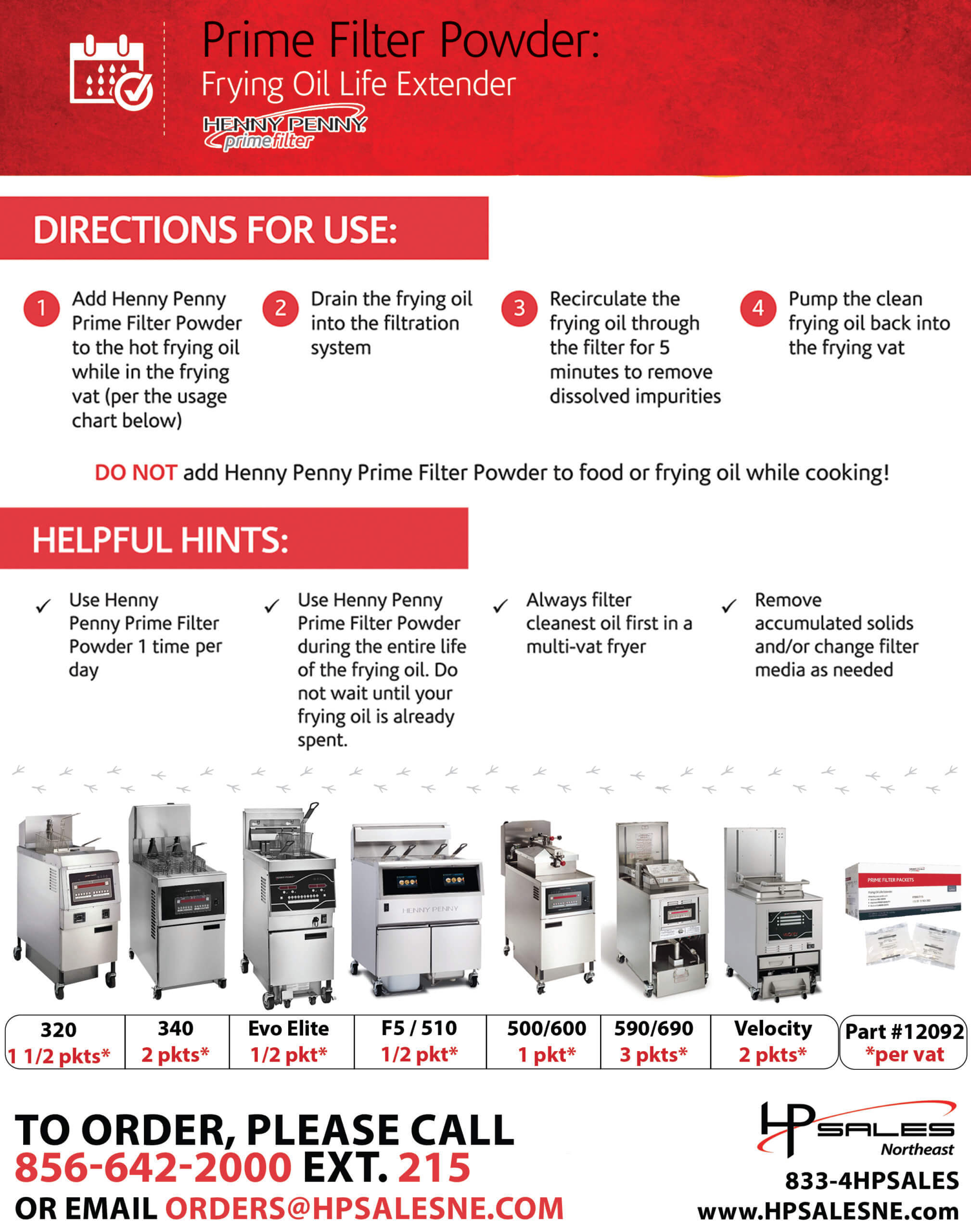
A standard fryer can use up to 50% more oil than a low-oil-volume model. That’s why more operators are switching to Henny Penny fryers that use less oil but cook just as efficiently. Add in daily filtration and powder-based oil treatments like Henny Penny’s Prime Filter Powder, and your oil can last up to twice as long.

What to look for: Fryers that filter automatically and extend oil life. You’ll get better food and save money doing it.


2. Energy Costs: Gas vs. Electric

Gas is usually cheaper than electricity, but it’s not always the better deal. Check out our blog post Gas or Electric – what’s right for you for more details.

  • Gas fryers heat up quickly and work well for high-volume menus. However, they lose more heat to the kitchen, which can drive up your HVAC costs.
  • Electric fryers are more efficient in how they heat the oil. In many areas, they’re now the better option over time, especially with cities limiting gas in new kitchens.

Your local utility rates and building codes will help determine which option makes more sense. We help operators compare the costs every week.


3. Labor: Time Is Money

Every minute your team spends scrubbing fryers or waiting for oil to cool is time they’re not spending on prep or service. That’s where better fryer design makes a difference.

Newer models are built to reduce cleanup time, filter automatically, and keep operation simple. That means less training, fewer mistakes, and less burnout from the messiest job in the kitchen.

And yes, Henny Penny is the leader in these labor-saving technologies.


4. Downtime and Repairs

A cheap fryer isn’t really cheap if it breaks during a Friday night rush.

The true cost of downtime isn’t just the repair. It’s the missed orders, the comped meals, and the bad reviews. Buying equipment that holds up, backed by reliable local service, is one of the smartest ways to save money in the long run.

At HP Sales Northeast, we include delivery, install, and training at no extra cost. We also have Henny Penny-trained techs across the region, ready when you need them.


5. Resale and Longevity

A high-quality fryer can last seven to ten years if you take care of it. Some of our customers are still using fryers they bought over a decade ago. And when it’s time to upgrade, equipment from a trusted brand keeps its value better than off-brand models.

Once upon a time, Henny Penny held a contest to find the oldest fryer in operation. Surprising no one, it was a 45 year old electric pressure fryer!


Final Thoughts

You’re not just buying a fryer. You’re taking on years of oil, energy, labor, and service costs. Spending smart at the start can save you thousands over the life of the machine.

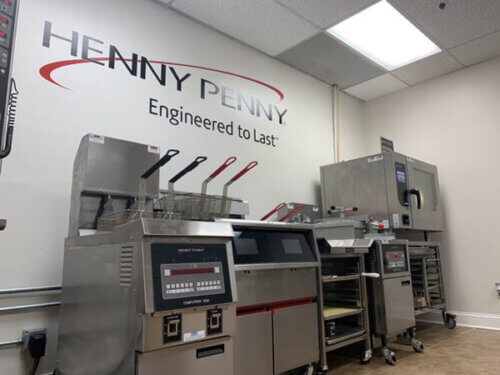
Want to see the difference for yourself? Come by our demo kitchen in Mount Laurel. Bring your menu. We’ll fire up the fryers and cook it together.

Want help comparing fryer costs in your kitchen?
Contact HP Sales Northeast or schedule a demo. We’re here to walk you through it.

Filed Under: Blog

What Is Henny Penny Prime Filter Powder?

July 8, 2025 By Corey Meyers

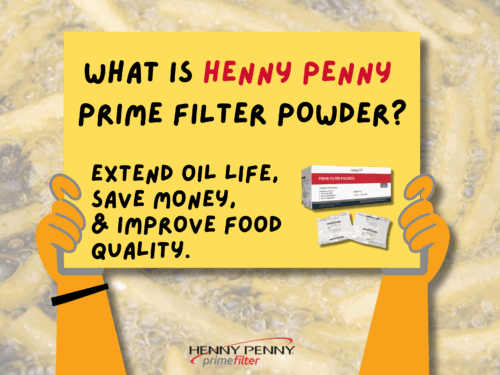
Extend oil life, save money, and improve food quality

If you’re serious about food quality and fryer performance, your oil matters. Filtering alone is great, but some operators want to squeeze a few more days of oil life out of their fryer. That’s where Henny Penny Prime Filter Powder comes in.

It’s a simple, food-safe white powder that helps you get more life out of your oil, keeps your food looking and tasting better, and cuts down on how often you have to drain and refill. All this translates to real savings over time.


So, what is it?

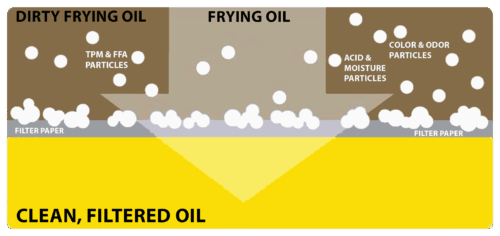
Henny Penny Prime Filter Powder is a food-safe, fine white compound made from magnesium silicate. It’s odorless, tasteless, and looks a bit like flour — but it works like a magnet, pulling out the carbon, crumbs, and dissolved impurities that break down your oil.

Just add a packet directly to your fryer oil during the filtration cycle — once or twice a day is all it takes. The result? Oil that lasts up to 50% longer, and fried food that looks and tastes consistently fresh.


How it works

It’s all about surface area. This powder has a porous internal structure with a high surface-to-volume ratio, which helps it bind to the gunk in your oil. The more you filter with Prime Powder, the less your oil breaks down — and the fewer times you’ll need to replace it.

Plus, it’s been tested and approved for foodservice use by the FDA, NSF, and WHO/FAO Joint Expert Committee on Food Additives. It’s safe, clean, and made specifically for frying environments.

Chef Ben explains it all – Prime Filter Powder

Available in multiple formats

Use what works best for your workflow — the results are the same: cleaner oil, better food, and lower costs. Prime Filter comes in the following formats:

  • Prime Filter Powder (loose powder to scoop or packet)
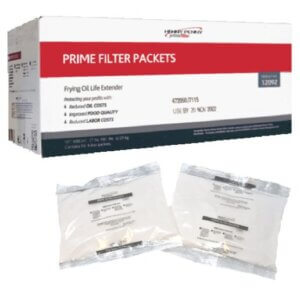
  • Prime Filter Packets (pre-measured for easy use)
  • Prime Filter HD Pads (built into the filter paper)

Get a Free Trial

When purchasing a new Henny Penny fryer from us, we’ll throw in a free trial supply of Prime Filter Powder to get you started. It’s an easy way to see the difference for yourself.

Have questions about filtration or fryer maintenance? We’re happy to walk you through it. Reach out anytime.


Documentation

Prime Filter Powder – food grade certificationDownload
Henny Penny Kosher CertificateDownload
Prime Filter Packets – Safety Data SheetDownload
Prime Filter Products – Enemies of oilDownload
HP HALAL CERTIFICATEDownload
HPNE Prime Filter Powder InstructionsDownload

Filed Under: Blog, Henny Penny Tagged With: Henny Penny

Gas vs Electric Fryers: Which is Right for You?

June 19, 2025 By Corey Meyers

Choosing between a gas and electric fryer isn’t just about what’s cheaper to run. There are lot’s of things to factor in, like how it affects your maintenance costs and whether your new equipment will pass inspection. If you’re planning a remodel or opening a new location, this decision matters more than ever. Almost every Henny Penny demo touches on gas vs electric fryers for this same reason.

As cities tighten restrictions on gas in new kitchens and manufacturers prioritize electric, more operators are asking the same thing: what should we buy next? If you’re opening a new spot or upgrading your line, now’s the time to rethink how you power your fryer.


Why Choose Electric Fryers?

The first thing you want to look at is price, I get it. Well, there’s two things to consider here.

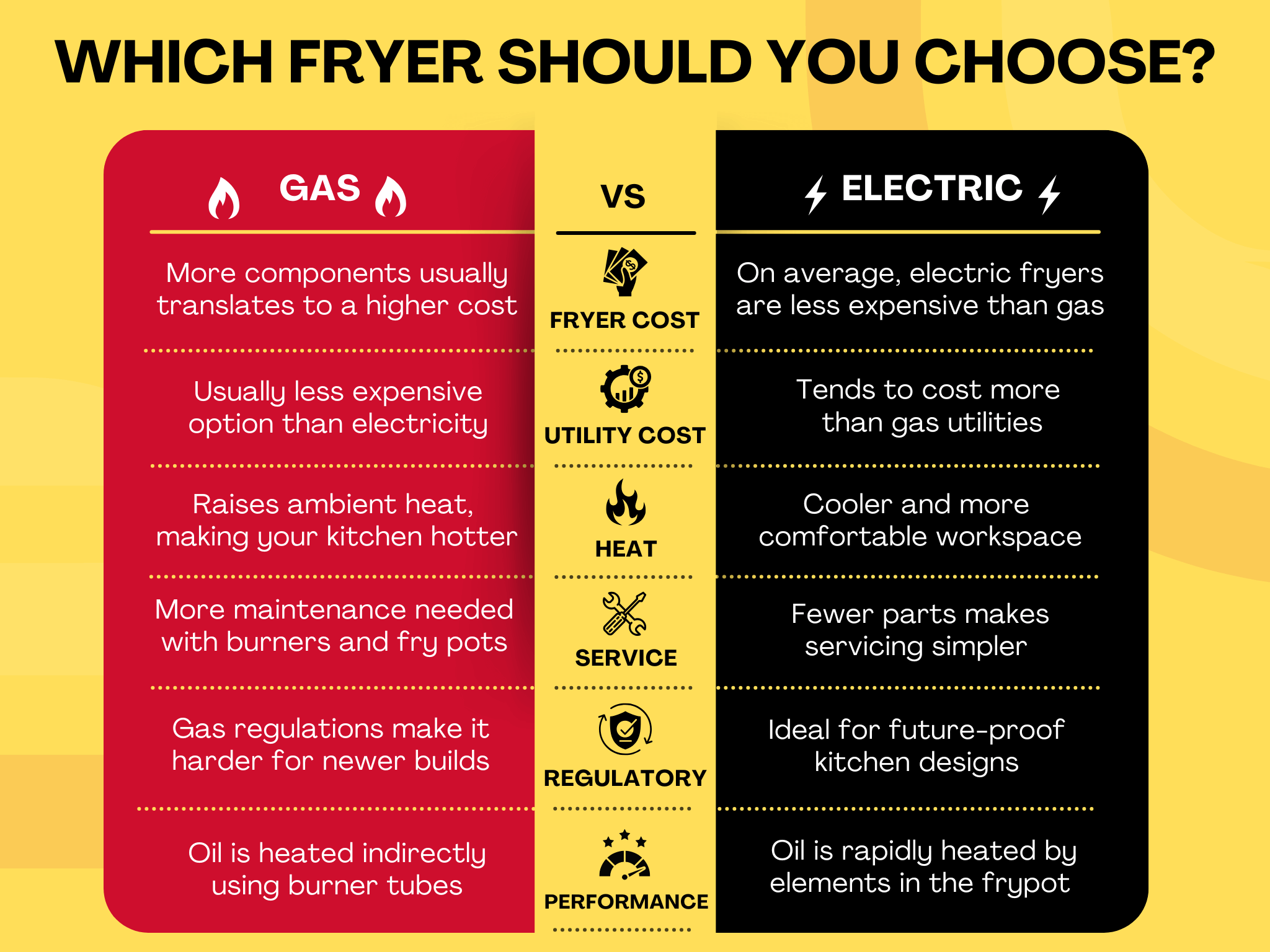
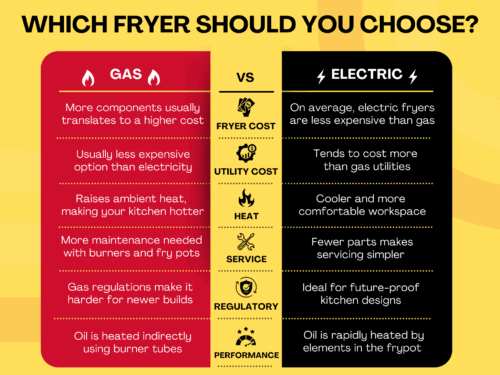
  1. When comparing an electric fryer to its gas counterpart, they’re usually less expensive. Without burner tubes or gas lines, electric units cost less to build. More on this below.
  2. Electricity as a utility is, on average, more expensive than gas.
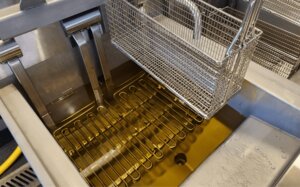
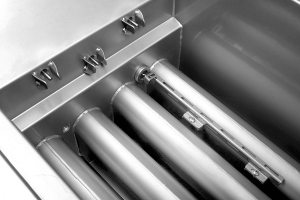
Efficient heating elements in an electric Henny Penny fryer

Electric fryers heat oil by sending power directly to elements sitting inside the vat, as seen in the photo above. No flame or no burner tubes; just direct, even heat. Electric fryers plug in and go. No gas hookup, no special permitting, and they’re easier to relocate if you ever change your layout. That’s a big deal in new builds or tight kitchens.

They also keep your kitchen cooler. Since they don’t rely on open flame, there’s less ambient heat pouring out around the fryer. That’s better for your staff and your air conditioning bill. Temperature control is precise too. When you drop frozen chicken, it recovers fast without spiking.

And yes, Chick-fil-A runs electric across the board. They’re not guessing. They did the math.


Easier to Service

It’s a cleaner design with fewer moving parts under the hood, which makes installation and service a whole lot easier. If you’ve ever waited days for a gas valve replacement, you know how much that matters.

Government Restrictions

More and more cities are starting to restrict gas hookups altogether. If you’re building or expanding, you might not even have the option. That’s part of why newer Henny Penny models like the F5 and the Velocity launched as electric only. It’s not a trend, it’s the direction the industry is heading.


Why Choose Gas Fryers?

Gas fryers use flame to heat burner tubes that warm the vat, which heats the oil. It’s a more complex chain reaction, but it works. If you’ve got a high-volume kitchen and already have gas service in place, it may be the cheaper route with your utility bill.

I’m sure by now you can sense a theme around cost. While gas equipment is cheaper to run, it might end up costing you more money somewhere else down the line. The cost of the fryer itself is normally more expensive and back of house HVAC isn’t cheap.

Natural gas, depending on your market, is usually less expensive than electricity. If you’re slamming out back-to-back batches all day long, that savings adds up. While gas itself usually costs less per BTU than electricity, especially if your rates are favorable, it throws off more ambient heat. That means your kitchen gets warmer, and your HVAC has to work harder.

If your staff has been using gas forever, there might be a comfort level with the setup. But you’re trading that for more heat in the kitchen, more complex components, and the possibility for more frequent service calls.

You also have to factor in where the regulations are going. A gas fryer that works today might not be allowed in a remodel five years from now.


So What’s the Move?

If you’re building new or willing to upgrade your lines, electric is probably the smart choice. Easier to install, easier to work on, and less likely to run into permitting headaches. It’s also where manufacturers like Henny Penny are putting their focus. The features, the R&D, the new launches—all electric first.

Gas still works. If you’ve got the infrastructure and you’re running nonstop, it might make sense to stick with it for now. But don’t get stuck in “we’ve always done it this way” mode. That mindset has cost operators more money than they realize.

Electric isn’t just a plan B anymore. It’s often the better option up front.

Stop by one of our demonstration kitchens to see the full line of Henny Penny fryers

Filed Under: Blog, Equipment Maitenance, Henny Penny, Uncategorized Tagged With: Chicken, Henny Penny, pressure fryer

The Smart Kitchen Shift

April 22, 2025 By Corey Meyers

How operators are cutting costs with smarter equipment.

Running a kitchen in 2025 isn’t for the faint of heart. Between labor challenges, rising ingredient costs, and back-of-house burnout, it’s no wonder more operators are taking a hard look at the equipment behind their menu.

Lately, we’ve seen a noticeable shift: operators aren’t just buying fryers or holding cabinets—they’re buying time, cost control, and peace of mind. And in many cases, that starts with one strategic upgrade.


Less Oil, Less Stress

Let’s start with oil. Everyone’s talking about it. The cost of oil has spiked, and so has the pressure to stretch it further. With Henny Penny’s oil-saving fryers—like the F5 and Velocity series—operators are cutting oil usage by up to 40% and extending oil life by double or more. That’s real money back in your pocket, and fewer oil changes during peak hours.

Want to see what that looks like for your kitchen?

Check out our oil savings calculator

Fewer Hands, Smarter Tools

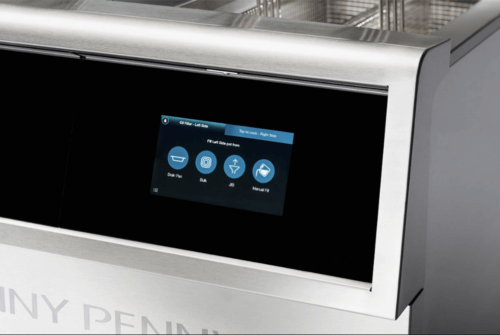
With labor as tight as ever, simplifying training is no longer a nice-to-have—it’s survival. Touchscreen interfaces, built-in filtration, and programmable cook cycles take the guesswork out of prep. Whether it’s a seasoned cook or a brand-new hire, the results stay consistent.

We’ve had customers come into our demonstration kitchen thinking their team would never adapt to new equipment—and leave realizing their team won’t want to go back.


Service Matters More Than Ever

It’s not just about the right fryer or combi. It’s about support. Equipment is only as good as the people backing it—and that’s where we come in. Our full-service approach means we handle delivery, install, training, and service. One call, no runaround.

And when something goes sideways (because in foodservice, it always does), you’re not stuck on hold or waiting for someone two states away. Our techs are in your region, ready to keep your kitchen moving.


Is It Time to Make the Switch?

We get it—buying new equipment is a big move. But the operators we talk to aren’t looking to overhaul everything at once. They’re identifying the pain points and solving them one piece at a time.

So if your fryer’s chewing through oil, or if your crew is burning out faster than the equipment, it might be time for a test drive. Come cook your menu in our kitchen. No pressure, just real results.

Let’s future-proof your kitchen—starting with what’s holding you back today.

Book A Demo

Filed Under: Blog, Henny Penny Tagged With: Chicken, Henny Penny, oil savings, open fryer

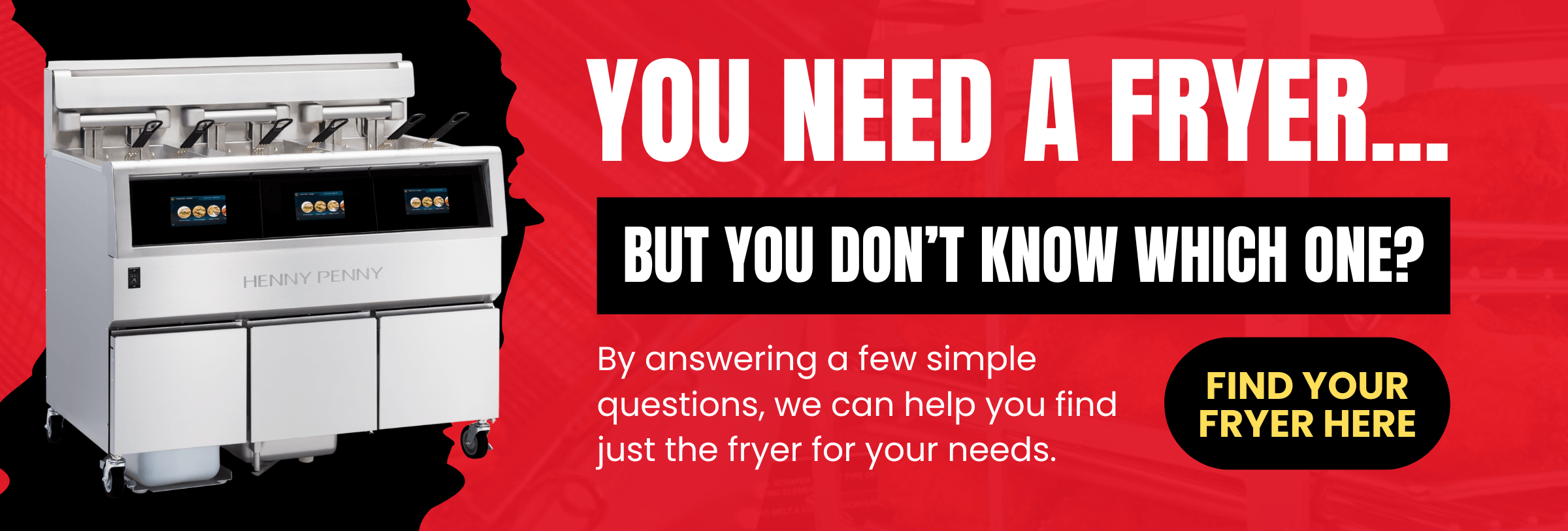
Find Your Fryer

March 13, 2025 By Corey Meyers

Which Henny Penny Fryer is Best for You?

When it comes to frying, the right equipment makes all the difference. Whether you run a high-volume QSR, a full-service restaurant, or a grocery store deli, choosing the right fryer can improve food quality, reduce oil costs, and streamline kitchen operations.

Henny Penny offers a range of state-of-the-art fryers designed to meet the unique needs of foodservice businesses. But with so many options available—open fryers, pressure fryers, and models with advanced filtration—it can be tough to determine which one is best for your operation. Fortunately, the Henny Penny “Find Your Fryer” tool makes the decision easy.


How Does the “Find Your Fryer” Tool Work?

This simple tool walks you through a series of questions about your business, menu, and kitchen setup to recommend the ideal fryer for your needs. Here’s how it helps:

  • Assesses your volume needs – Whether you’re frying a few batches a day or cranking out hundreds of pounds of fried food, the tool considers your output requirements.
  • Matches fryers to your menu – Different foods require different frying solutions. Pressure fryers are perfect for bone-in chicken, while open fryers handle crispy fries, wings, and battered foods with ease.
  • Calculates potential oil savings – Henny Penny’s fryers feature innovative oil management systems, including built-in filtration and low-oil-volume technology, helping you save on one of your biggest ongoing costs.
  • Considers your space and kitchen flow – Do you need a standalone fryer or a multi-well system? The tool takes your kitchen layout into account to recommend the right fit.

Explore the Best Henny Penny Fryers

Henny Penny offers a variety of models tailored to different foodservice operations. Here are some of the most popular options:

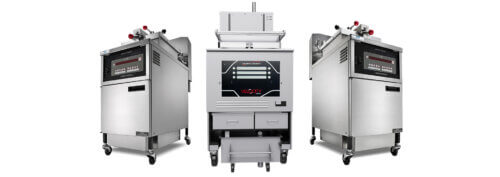
1. Pressure Fryers

Perfect for: Quick-service chains, grocery stores, and any operation serving high-quality, juicy fried chicken.

  • Example Model: Henny Penny PFG 600 – Delivers consistently crispy chicken with 4-head capacity and built-in filtration to extend oil life.

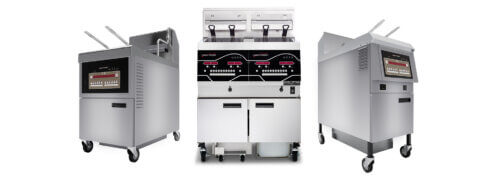
2. Open Fryers

Perfect for: Restaurants, bars, and cafes frying a variety of items like fries, tenders, seafood, and appetizers.

  • Example Model: Henny Penny Evolution Elite – Features Low Oil Volume (LOV) technology to cut oil use by up to 40%.
  • Example Model: Henny Penny F5 – Features the same Low Oil Volume (LOV) technology to cut oil use by up to 40%, btu with a touch screen and faster filtration pumps.

Choosing the right fryer doesn’t have to be complicated. Use the Henny Penny “Find Your Fryer” tool to get a personalized recommendation tailored to your menu, volume, and kitchen needs.

Ready to take the next step? Contact us at HP Sales Northeast to schedule a demo and see these fryers in action!

Ready to learn more?

Schedule some time to check out our demo kitchen.

Contact us for a demo today

Filed Under: Frying, Henny Penny, Uncategorized

  • Page 1
  • Page 2
  • Page 3
  • …
  • Page 14
  • Next Page »

Footer

Contact Us

113 Gaither Drive; Unit 206
Mount Laurel, NJ 08054
856-642-2000


11 Avenue E.
Hopkinton, MA 01748
833-4HPSales

Sign Up For Our Newsletter

  • This field is for validation purposes and should be left unchanged.

Copyright © 2026 · HPSALESNE.com